ABSTRACT
In this study, the definitions of digital assets and cryptocurrencies and the inheritance of these assets are analyzed.
I. INTRODUCTION
The subject of our study is the inheritance of digital assets and cryptocurrencies. Firstly, the meaning of the concepts of digital assets and cryptocurrencies will be explained. Then, the place of crypto assets in Turkish Law, them being subject to inheritance and how they will be transferred to the heirs will be discussed. In the last part of our study, other digital assets with monetary value and the inheritance of these assets will be examined.
II. DIGITAL ASSETS AND CRYPTOCURRENCIES
Digital assets are assets that are created, stored and transmitted digitally. These assets include various digital elements such as digital documents, photos, videos, audio recordings, software, emails, social media accounts and crypto assets1.
Digital assets are categorized according to whether they are based on cryptography2 or a similar technology that encrypts data using mathematical operations so that it can only be read and processed by specific individuals. Accordingly, digital assets are divided into crypto assets and non-crypto assets. Crypto assets include payment tokens, securities tokens and service tokens, while non-crypto assets include assets such as social media account login information and content such as photos, videos, etc. in these accounts, digital music, blogs, internet trainings3.
In the Capital Markets Law published in the Official Gazette dated 02.07.2024 and numbered 32590, the law known among the public as the “Crypto Asset Law,” which allows the inclusion of crypto assets within the scope of legislation, has come into force. According to this law, crypto assets are defined as “Intangible assets that can be electronically created and stored using distributed ledger technology or similar technology, distributed over digital networks, and can represent value or rights”4.
Crypto assets have a decentralized structure and are designed as a medium of exchange. These assets use cryptography, a science of encryption, to secure transactions and ensure security. The system that maintains control of the decentralized structure and keeps it operational is a record list held by a global computer network called Blockchain5.
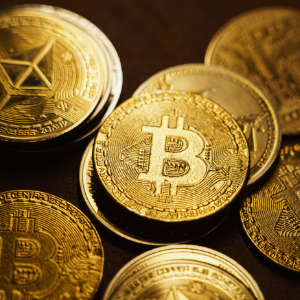
Payment tokens, which are among crypto assets, consist of cryptocurrencies such as Bitcoin, Ethereum, and Tether. The concept of cryptocurrency is specifically used for Bitcoin and subsequent altcoins like Ethereum and Tether6. In the Blockchain Glossary published by the Presidential Digital Transformation Office, cryptocurrencies are defined as virtual currencies used as a means of payment on the blockchain network7.
To better understand cryptocurrencies, it would be beneficial to discuss the basic information.
i. Private Key and Public Key:
To participate in a blockchain network, a user needs to have a unique public address, similar to an IBAN number. Additionally, a person registered on the blockchain needs to have both a private key and a public key. The user uses the private key to control their assets on the blockchain and to perform transfer transactions, while the verification of transactions by other users is done through the public key. As a result, the owner of the private key also owns the assets on the blockchain. Therefore, the security of cryptocurrencies depends on the protection of the private key, and it is essential to keep this key in a secure environment8.
ii. Wallet:
Users need a wallet to carry out cryptocurrency transfers. This wallet contains and manages both the address and the pairs of public and private keys. Cryptocurrencies and related transfer transactions are carried out through these keys stored in the wallet. The public key is generated using the private key and is stored in the wallet9.
Another important asset within crypto assets is the NFT. NFTs, which stand for “non-fungible tokens”10 can be defined as “non-interchangeable digital assets” that are mathematically, or cryptographically, created using blockchain technology for intellectual products or assets such as photos, paintings, virtual structures, and lands, etc., and cannot be replaced by another. Due to the nature of NFTs as works, intellectual property issues frequently arise, especially concerning NFTs11. According to the Blockchain Glossary published by the Presidency, NFTs are defined as a unique and special type of crypto token, produced cryptographically using blockchain technology, under the name of qualified intellectual property deed12.
Digital assets have their own unique meaning, characteristics, and financial, social, and emotional value. Therefore, considering these aspects, it is also possible to classify digital assets as those with monetary value, those with social value, those with emotional value, and other digital assets that do not fit into these three categories13.
In this article, digital assets with monetary value, which can be considered as investment tools and are defined as assets that store or process individuals’ financial assets and data, will be examined.
III. THE PLACE OF CRYPTO ASSETS IN TURKISH LAW
The legal nature of crypto assets has become one of the significant topics of discussion today. In this context, the classification of crypto assets and the evaluations regarding their place in Turkish Law are of great importance for resolving legal uncertainties.
According to Article 3 of the Regulation on the Non-Use of Crypto Assets in Payments, published in the Official Gazette on April 16, 2021, crypto assets are emphasized as intangible assets that are not considered fiat money, scriptural money, electronic money, payment instruments, securities, or other capital market instruments. Additionally, the second paragraph of the same article states that crypto assets cannot be used directly or indirectly in payments and cannot be subject to any such services14. Even though this asset, which does not have the nature of a payment instrument, carries monetary value, it cannot be legally classified as money15.
There are different opinions in our law regarding whether cryptocurrencies can be considered within the concept of property. Before discussing these views, it is necessary to explain what the concept of property means. Although the concept of property is not explicitly defined in the Law No. 4721 on Turkish Civil Code (“Law No. 4721”), some articles of the Law No. 4721 specify the subject of movable and immovable property ownership. According to these articles, the subject of property law consists of tangible items. In doctrine, property is accepted as tangible assets that can be individually controlled, have economic value, and exist outside of a person16. Based on this definition, for an asset to be considered property, it must be tangible, controllable, not attached to a person, have defined boundaries, and carry economic value17.
There are two main views on whether cryptocurrencies can be considered within the concept of property. According to the first view, unless a special regulation is made, it is incorrect to consider cryptocurrencies as property because they are not tangible assets18. The second view argues that the concept of property is not a fixed, unchangeable, and absolute concept; rather, it is a functional concept that can be shaped according to legal, social, and economic value judgments and can change over time and according to needs19.
The points mentioned above for cryptocurrencies are also applicable to NFTs. Additionally, it is important to consider whether NFTs can be regarded as works under the Law on Intellectual and Artistic Works No. 5846 (“Law No. 5846”). The concept of a work is defined in Article 1/B of the Law No. 5846 as “All kinds of intellectual and artistic products that bear the characteristics of their owner and are considered as works of science and literature, music, fine arts, or cinema”20. Based on this definition, two elements are needed for a digital asset to be considered a work: subjective and objective elements. The work must both embody the spirit of its owner and fall within one of the types of works listed in the law.
According to the Law No. 5846, the types of works are listed in a limited manner. Therefore, for art pieces in the form of non-fungible tokens to be considered works, they must fall within one of the types of works listed in the law: scientific and literary works (Law No. 5846 Article 2), musical works (Law No. 5846 Article 3), works of fine arts (Law No. 5846 Article 4), and cinematographic works (Law No. 5846 Article 5).
In terms of works of fine arts, the material on which the work is created is not important, and the person creating the work does not need to be an artist. Therefore, there are opinions that a digital asset in the form of a non-fungible token can be considered a work of fine art as long as it embodies the characteristics of its owner and has aesthetic value21. Products that are not created by human intelligence and are produced solely by computers cannot be considered works. Therefore, if an NFT is the product of a completely autonomous process, it cannot be regarded as a work22.
IV. INHERITANCE OF CRYPTO ASSETS
There is a common understanding that, due to the economic value of crypto assets, the right over them falls within the scope of property rights, and therefore, the inheritance of crypto assets is possible.
Article 599 of the Law No. 4721, under the title “Acquisition of Inheritance,” stipulates that heirs will acquire the entire estate as a whole upon the death of the deceased23. The continuation of the same article states, “Except for the exceptions provided by law, the heirs directly acquire the deceased’s real rights, receivables, other property rights, and possession of movable and immovable properties, and they are personally liable for the deceased’s debts”24.
By including the expression “other assets” in the text of the article, the legislator has kept this provision broad. In this context, cryptocurrencies, which have economic value, will be considered within the scope of other assets due to their property value and will be transferred to the heirs according to the principle of universal succession stated in Article 599/2 of the Law No. 4721.
NFTs, a type of crypto asset, are included in the estate’s assets due to their monetary value, whether they are considered works of art or not. Therefore, NFTs also fall under the principle of universal succession25.
Similarly, crypto assets can be transferred to heirs through universal succession, as well as through a testamentary disposition made in the form of an inheritance contract or a will .
V. INHERITANCE OF CRYPTOCURRENCIES TO HEIRS
In inheritances that automatically transfer through universal succession, there is a possibility that the areas where the private keys related to cryptocurrencies are stored could be a centralized crypto asset exchange, or these private keys could be in decentralized exchanges or physical wallets known as cold wallets26. In other words, the procedures required for inheritance will vary depending on whether the cryptocurrencies are held on an exchange or outside of an exchange.
Centralized crypto asset exchanges refer to exchanges managed by a central authority where the buying and selling of cryptocurrencies are conducted27. In such exchanges, the individual does not possess the private key. The private keys are stored by the exchanges. Cryptocurrencies held in these types of exchanges can be transferred to the heirs upon the account holder’s death by presenting the death certificate, certificate of inheritance, and other necessary documents to the exchange, or, if necessary, through a lawsuit that can be initiated28. In other words, if the system where the private keys are stored is a centralized system, there is a contact point that the heirs can approach when the account holder dies. However, this should not be interpreted as a claim right against the exchange. The exchange’s responsibility in such a situation is limited to the wallet in which the crypto asset is held.
The procedures mentioned above for exchanges managed by a central authority can be applied to cryptocurrencies held in domestic exchanges. If the exchange holding the cryptocurrencies is located abroad, it will be necessary to act according to the legislation of the relevant country.
If the private key is stored in a physical wallet whose password is known only by the account holder, it can be said that it will be more difficult for the heirs to gain control over these assets in the event of the account holder’s death, due to the absence of a contact point. For example, if the account holder passes away and the heirs do not know the password to the relevant account, accessing that asset will be quite challenging. In such physical wallets, heirs may file a lawsuit for the determination of the estate, requesting the decryption of the wallet’s passwords and the division of the assets within the wallet according to their shares29. However, this may not always be possible. To avoid such a situation, it is necessary for the heirs to have information about the status of the relevant cryptocurrencies, account details, and passwords to ensure access to assets held in physical wallets or decentralized exchanges in the event of the account holder’s death.
VI. OTHER DIGITAL ASSETS WITH MONETARY VALUE
In this section of our study, we will discuss other digital assets with monetary value that do not fall under the category of crypto assets. These include social media account login information and the photos, videos, etc., contained within these accounts, digital music, blogs, free online courses, and similar assets. Such digital assets may have been used by the deceased for economic, non-economic, or mixed purposes30. If a digital asset is not used for economic purposes and does not carry economic value, it is not suitable for inheritance according to Law No. 4721 Article 599. However, it should be noted that in terms of inheritance law, what matters is not the purpose for which the deceased created the digital asset, but the purpose for which the digital asset was being used at the time of the deceased’s death.
If a digital asset has economic value or is used for economic purposes in a lawful manner, whether it can be inherited depends on the data it contains. If the digital asset does not contain personal data of the account holder or third parties, it is considered suitable for inheritance. If the digital asset contains personal data and the transfer of this data to the heirs does not violate the personal rights of the deceased or third parties, or if it is legally possible to separate the personal data from the account, these digital assets can also be inherited.
The reason third parties follow or subscribe to an account may be the content shared on the account rather than the identity of the account holder. Accounts that are used anonymously by their owners, sharing photos, videos, blog posts, and similar content without containing any personal data and without any economic purpose or concern, should also be included in the estate.
When a digital asset carries economic value despite not being used for economic purposes, there can be a conflict between the personal interests of the deceased and the property interests of the heirs. The primary consideration should be the extent to which the deceased used the account openly to third parties and how much the account reflects the personal characteristics of the owner. If the content shared on an account clearly reveals the identity of the account holder, it is evident that the account reflects the personality of the owner and can be associated with the owner by third parties. Accounts used by political figures can serve as examples of such accounts. In such cases, where the account is not used for economic purposes but carries economic value, the personal interests of the deceased will outweigh the property interests of the heirs, and therefore, the account cannot be inherited31.
The Antalya Regional Court of Appeal, 6th Civil Chamber, has highlighted the legal gap regarding digital inheritance. In the case, the surviving spouse wanted to access the deceased spouse’s photos on their mobile phone, e-commerce site account, coupons, and iCloud account. The spouse applied to Apple Technology and Sales Limited Company with this request, but the application was rejected by the company on the grounds that there was no court order. Subsequently, the heir applied to the civil court of peace with a request for the determination of the estate, but the first-instance court ruled that the purpose of the estate determination case is to identify the assets and rights of the deceased, and that accessing the iCloud account on the deceased’s phone would violate the privacy of the deceased’s private life. The court also noted that the heirs could access the photos stored on the phone without accessing the iCloud account, and therefore, the plaintiff’s request could not be the subject of an estate determination case, and dismissed the case. The heir appealed the decision, and the Antalya Regional Court of Appeal emphasized that the concept of digital ownership has emerged in the face of today’s technological developments, and that no legal regulation has been made on the subject so far. The court noted that email accounts, digital applications, and social media accounts are used not only for personal purposes but also for material value purposes. Consequently, the court found it erroneous to reject the request by considering the deceased’s email account within the framework of privacy, and stated that the estate determination case should include the identification of all active and passive assets of the deceased as of the date of death, and that digital assets should also be included in the estate. The court ruled that a decision should be made after research and examination regarding the digital estate32.
VII. CONCLUSION
As a result, with the rapid development of technology, the digital world has become an integral part of our daily lives. This rapid development has led to the execution, advancement, and storage of many processes in the internet environment, resulting in the importance of digital assets alongside physical assets and the emergence of crypto assets. How these new areas will be transferred through inheritance has also become a matter of curiosity. Although the transfer of digital assets and cryptocurrencies through inheritance seems possible within the framework of current legal regulations and judicial decisions based on our examinations, there is a need for clearer and more comprehensive legal regulations in this area. Regulations that will facilitate the heirs’ access to digital assets and eliminate legal uncertainties will ensure more effective management of digital inheritance in the future.
BIBLIOGRAPHY
ŞERAFETTİN EKİCİ, Metaverse Law, 1st Edition, Ankara 2023.
ERDEM BÜYÜKSAĞİŞ/ SİNEM ÖZYİĞİT/ SELİN MİRKELAM FALAY/ İLAY EZGİ BULDAĞ/ MUSTAFA SAİD OKUR, Transfer of Digital Assets through Inheritance, Supreme Court Journal, Volume 47, Issue 2, 2021, (Access Date: 21.07.2024) https://search. trdizin.gov.tr/tr/yayin/detay/506369/dijital-varliklarin-miras-yoluyla-intikali.
SİNAN SAMİ AKKURT, Leaving Digital Assets through Inheritance, 1st Edition, Ankara 2022.
MEHMET AKÇAAL, Transfer of NFT (Non-Fungible Token) Artworks through Inheritance, Turkish Bar Association Journal 2022, (Access Date: 25.07.2024) https://tbbdergisi.barobirlik.org. tr/m2022-159-2043.
ARGUN KARAMANLIOĞLU, “Legal Nature of Cryptocurrencies and Findings and Recommendations on Cryptocurrency Exchanges in Light of Recent Developments”, (Access Date: 08.07.2024) https://hukukbulteni.khas.edu.tr/bulten/45.
ZAFER ZEYTİN/ ÖMER ERGÜN, Turkish Civil Law, 6th Edition, Ankara 2022.
ASUMAN TURANBOY, Emergence and Legal Nature of Cryptocurrencies, Volume 35, Issue 3, 2019, (Access Date: 23.07.2024) https://www.lexpera.com.tr/literatur/batider-makaleler/kripto-paralarin-ortaya-cikmalari-ve-hukuki-nitelikleri-kripto-paralarin-ortaya-cikmalari-ve-hukuki.
GÖKHAN ANTALYA, Property Law, Introduction, Basic Concepts, General Principles, Volume 1, Istanbul 2017.
GAMZE TURAN BAŞARA, Fundamental Issues Specific to Inheritance Law Regarding Cryptocurrencies, Inonu University Faculty of Law Journal, 2023, (Access Date: 22.07.2024) https://dergipark. org.tr/tr/download/article-file/2659888.
MELTEM KESKİN, Evaluation of Cryptocurrency Trading Platforms as Exchanges, Ankara 2022, (Access Date: 28.07.2024) https://www.researchgate.net/publication/359341864_Kripto_ Varlik_Alim_Satim_Platformlarinin_Borsa_Olarak_Degerlendirilmesi.
TAYFUR SÜLEYMAN KOÇ/ GÜNEŞ YILMAZ, Evaluation of Cryptocurrencies in Terms of Inheritance Law, Tax World 2020. Presidency of the Republic of Turkey Digital Transformation Office, “Blockchain Glossary”, (Access Date: 20.07.2024) https://cbddo. gov.tr/sss/blokzincir-sozlugu/. Official Gazette dated 02.07.2024 and numbered 32590 (OG), (Access Date: 21.07.2024) https://www.resmigazete.gov.tr/eskiler/2024/07/20240702-1.htm. OG dated 16.04.2021 and numbered 31456, (Access Date: 22.07.2024) https://www.resmigazete.gov.tr/eskiler/2021/04/20210416-4.htm. Turkish Civil Court (Law No. 4721), (Access Date: 25.07.2024) https:// www.mevzuat.gov.tr/mevzuat?MevzuatNo=4721&MevzuatTur=1&MevzuatTertip=5. Law on Intellectual and Artistic Works Art. 1/B (Law No. 5846), (Access Date: 22.07.2024) https://www.mevzuat.gov.tr/mevzuatmetin/1.3.5846.pdf. Antalya Regional Court of Justice 6th Civil Chamber, D. 13.11.2020, C. 2020/1149, D. 2020/905, (Access Date: 01.08.2024) https://lib. kazanci.com.tr/kho3/ibb/files/is-antalyabam-6hd-2020-1149.htm.
FOOTNOTE
1 Şerafettin Ekici, Metaverse Law (Metaverse), 1st Edition, Ankara 2023, p. 128.
2 Republic of Turkey Presidency Digital Transformation Office, “Blockchain Glossary”, https://cbddo.gov.tr/ sss/blokzincir-sozlugu/ (Access Date, 20.07.2024).
3 Erdem Büyüksağiş/ Sinem Özyiğit/ Selin Mirkelam Falay/ İlay Ezgi Buldağ/ Mustafa Said Okur, Transfer of Digital Assets through Inheritance (Transfer through Inheritance), Journal of the Court of Cassation, Volume 47, Issue 2, 2021, p. 369.https://search.trdizin.gov.tr/tr/ yayin/detay/506369/dijital-varliklarin-miras-yoluyla-intikali (Access Date, 21.07.2024).
4 Official Gazette (OG) dated 02.07.2024 and numbered 32590, https://www.resmigazete.gov.tr/eskiler/2024/07/20240702-1.htm (Access Date, 21.07.2024).
5 Sinan Sami Akkurt, Leaving Digital Assets through Inheritance (Leaving through Inheritance), 1st Edition, Ankara 2022, p. 130-131
6 Akkurt, Leaving through Inheritance, p. 129.
7 Presidency of the Republic of Turkey Digital Transformation Office, “Blockchain Glossary”, https://cbddo. gov.tr/sss/blokzincir-sozlugu/ (Access Date, 20.07.2024).
8 Gamze Turan Başara, Fundamental Issues Specific to Inheritance Law Regarding Cryptocurrencies (Fundamental Issues), Inönü University Faculty of Law Journal, 2023, p. 18, https://dergipark.org.tr/tr/download/ article-file/2659888 (Access Date, 22.07.2024).
9 Başara, Fundamental Issues, p. 19.
10 Ekici, Metaverse, p. 59.
11 Ekici, Metaverse, p. 60.
12 Presidency of the Republic of Turkey Digital Transformation Office, “Blockchain Glossary”, https://cbddo. gov.tr/sss/blokzincir-sozlugu/ (Access Date, 20.07.2024).
13 Ekici, Metaverse, p. 129.
14 Official Gazette (OG) dated 16.04.2021 and numbered 31456, https://www.resmigazete.gov.tr/eskiler/2021/04/20210416-4.htm (Access Date, 22.07.2024).
15 Argun Karamanlıoğlu, “The Legal Nature of Cryptocurrencies and Findings and Recommendations Regarding Cryptocurrency Exchanges in Light of Recent Developments”, https://hukukbulteni.khas.edu.tr/bulten/45 (Access Date, 08.07.2024).
16 M. Kemal Oğuzman/ Ömer Seliçi/ Saibe Oktay Özdemir, Property Law, 3rd Edition, Istanbul 2014, p. 251.
17 Zafer Zeytin/ Ömer Ergün, Turkish Civil Law, 6th Edition, Ankara 2022, p. 255-256.
18 Asuman Turanboy, Emergence and Legal Nature of Cryptocurrencies, Volume 35, Issue 3, 2019, p. 57.
19 Gökhan Antalya, Property Law, Introduction, Basic Concepts, General Principles, Volume 1, Istanbul 2017, p. 15-16.
20 Law on Intellectual and Artistic Works, Article 1/B (Law No. 5846), https://www.mevzuat.gov.tr/mevzuatmetin/1.3.5846.pdf (Access Date, 22.07.2024).
21 Mehmet Akçaal, Transfer of NFT (Non-Fungible Token) Artworks through Inheritance (Non-Fungible Token), Journal of the Union of Turkish Bar Associations 2022, p. 383., https:// tbbdergisi.barobirlik.org.tr/m2022159-2043 (Access Date, 25.07.2024).
22 Akçaal, Non-Fungible Token, p. 381.
23 Turkish Civil Code (Law No. 4721) Article 599, https://www.mevzuat.gov. tr/mevzuat?MevzuatNo=4721&MevzuatTur=1&MevzuatTertip=5 (Access Date, 25.07.2024).
24 Law No. 4721 Article 599 continued.
25 Akçaal, Non-Fungible Token, p. 386.
26 Akkurt, Leaving through Inheritance, p. 153.
27 Meltem Keskin, Evaluation of Crypto Asset Trading Platforms as Stock Exchanges, Ankara 2022, p.43, https://www.researchgate.net/ publication/359341864_Kripto_Varlik_Alim_Satim_Platformlarinin_Borsa_Olarak_Degerlendirilmesi (Access Date, 28.07.2024).
28 Akkurt, Leaving through Inheritance, p. 153-154.
29 Tayfur Süleyman Koç/ Güneş Yılmaz, Evaluation of Cryptocurrencies in terms of Inheritance Law, Vergi Dünyası 2020, p. 19.
30 Büyüksağiş/ Özyiğit/ Falay/ Buldağ/ Okur, Inheritance through Inheritance, p. 375.
31 Büyüksağiş/ Özyiğit/ Falay/ Buldağ/ Okur, Inheritance through Inheritance, p. 379.
32 Antalya Regional Court of Justice 6th Civil Chamber, D. 13.11.2020, C. 2020/1149, D. 2020/905. https://lib. kazanci.com.tr/kho3/ibb/files/is-antalyabam-6hd-2020-1149.htm (Access Date, 01.08.2024).